


Jason Crews is the owner and editor of INFRARED MAGAZINE and a Dallas–Fort Worth-based music journalist and concert photographer. Through INFRARED MAGAZINE and JASON CREWS PHOTOGRAPHY, he covers rock, metal, country, and live music with a focus on album reviews, artist features, concert coverage, and photography. His work is driven by a genuine passion for music and helping artists connect with new audiences through honest writing, strong visuals, and meaningful storytelling.
Rating: 8.5 / 10 Stars
ARCHITECTS is: Sam Carter (Vocals), Adam Christianson (Guitars), Josh Middleton (Guitars), Alex Dean (Bass), and Dan Searle (Drums)
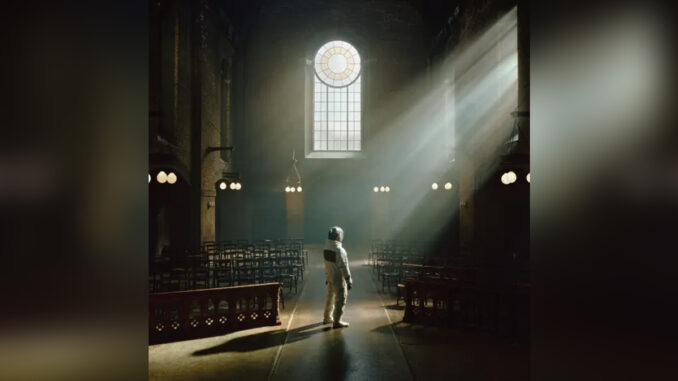
REVIEW – There comes a moment in the life of any important heavy band when survival demands more than refinement. It demands risk. ARCHITECTS have already built a legacy on precision, grief, rage, moral urgency, and a kind of technical emotional violence that helped define a generation of modern metalcore. But with For Those That Wish to Exist, set to arrive February 26, 2021 through Epitaph Records, the Brighton quintet are preparing to step into more divisive territory: bigger songs, wider spaces, orchestral ambition, arena-sized hooks, and a lyrical worldview that turns away from pure nihilism in search of accountability. The album is confirmed as the band’s ninth studio record, with Epitaph Records announced as the label behind its release.
That shift is important because Architects are not just another band making a “mature” record. They are a band still living in the long emotional shadow of loss, still carrying the weight of Holy Hell, still asking what heavy music can do after catharsis has already been achieved. For Those That Wish to Exist does not appear interested in repeating the same wound. It asks a more uncomfortable question: once you have screamed about the end of the world, what responsibility do you have to do something about it?
Dan Searle’s framing of the album makes that intention clear. This is a record about questioning passivity, about recognizing disaster not as an abstract apocalypse but as something humans participate in, ignore, normalize, and excuse. The title itself sounds less like an accusation than an invitation with consequences. For Those That Wish to Exist implies that existence is not guaranteed. It must be chosen. It must be defended. It may even require sacrifice.
The opening “Do You Dream of Armageddon?” seems designed as a threshold rather than a traditional band explosion. Dan Searle has described it as featuring Sam Carter without the rest of the band, and that choice gives the album a fascinating first breath. Instead of immediately presenting Architects as a full-force machine, the record appears to begin with isolation, voice, and warning. The question is not “do you fear Armageddon?” but “do you dream of it?” That distinction matters. It suggests complicity, numbness, maybe even desire. In a world addicted to collapse as spectacle, apocalypse can become entertainment before it becomes consequence.
“Black Lungs” feels like the real ignition point. Already unveiled before the album, it presents Architects in a form that is recognizably huge but not simply familiar. The chorus is massive, the guitars grind with industrial weight, and Carter’s voice carries both fury and command. The title evokes pollution, suffocation, and the body internalizing the poison of the world around it. As an opener in spirit, it makes sense: this is Architects easing listeners into the new terrain while still delivering enough abrasion to remind everyone what kind of band is holding the reins.
“Giving Blood” pushes further into that new water. Searle has said the song began with drums and synth before guitars entered the picture, and that origin gives the track its sense of architecture being assembled from unexpected materials. It is still heavy rock, still recognizably Architects, but it suggests a band increasingly interested in rhythm, texture, and atmosphere as emotional engines. The title itself is loaded with exhaustion. Giving blood can be generosity, injury, ritual, or depletion. Architects have always written about cost, and here that cost seems to take on a more physical shape.
“Discourse Is Dead” may be one of the album’s sharpest statements. In a time of polarization, public rage, and collapsing dialogue, the title lands with brutal simplicity. Architects have never shied away from political or ethical urgency, but this track appears less interested in slogan-writing than in diagnosing the failure of communication itself. The song seems built to make enemies, and perhaps it should. Heavy music that refuses to risk discomfort often becomes decoration. Architects sound ready to point at the wreckage of public conversation and ask why everyone is so invested in staying divided.
“Dead Butterflies” is where the album’s orchestral ambitions truly begin to glow. Built initially around strings and bass, the song suggests one of the most expansive emotional moments on the record. The image is delicate and devastating: beauty destroyed, transformation stopped mid-flight, something once alive reduced to symbol. Architects’ best melodic writing has always carried grief inside its lift, and “Dead Butterflies” appears ready to turn that into widescreen drama. The orchestral approach does not feel like an accessory here. It feels like the only scale large enough to hold the song’s sadness.
“An Ordinary Extinction” may be one of the album’s most conceptually powerful titles. There is something horrifying about the word “ordinary” placed before “extinction.” It suggests that catastrophe has become routine, that the end of species, systems, futures, and possibilities has been normalized into background noise. Searle has pointed to the track as containing some of the heaviest material on the record despite its trippy nature, and that contrast is exactly where Architects can thrive. The heaviest thing about extinction is not always the explosion. Sometimes it is the casual way it is allowed to happen.
“Impermanence” continues the record’s meditation on mortality and existence while linking thematically back to Holy Hell. The song has the feel of an end-of-the-world stomp, and its guest appearance from Winston McCall gives it additional force. Architects are not strangers to mortality as subject matter, but here it seems less personal and more cosmic. Impermanence is the condition under everything: bodies, civilizations, ecosystems, identities, careers, grief itself. The track appears to stand as one of the album’s central reminders that nothing lasts, which can be terrifying, liberating, or both.
“Flight Without Feathers” is one of the most intriguing risks in the sequence. Built around basslines and stripped of Dan Searle’s drumming, the song suggests a deliberate pause in the album’s momentum. That matters. Architects have spent years perfecting intensity, but For Those That Wish to Exist seems determined to explore what happens when intensity is removed and only the emotional skeleton remains. The title implies impossible escape, ascent without the tools required for flight. It is a beautiful image for a record about wanting to survive in a world that may not be built for survival.
“Little Wonder,” featuring Mike Kerr of Royal Blood, marks another stylistic widening. Searle has described the song as a cheeky nod to its own difference, and that self-awareness is important. Architects know this record will challenge some listeners. They know the genre can punish deviation. But “Little Wonder” seems to lean into that tension rather than apologize for it. It is a song about seeing what is wrong and still wanting an easy life, a deeply human contradiction. Everyone wants change until change demands discomfort. Everyone sees the fire until the smoke reaches their own house.
Then there is “Animals,” the single that signaled this new era most forcefully. Released ahead of the album, it has already become impossible to separate from the record’s identity. “Animals” is stripped back, mechanical, massive, and direct in a way that Architects have rarely been. It does not rely on technical density. It relies on impact. The central refrain lands like a grim mantra, less a lyric than a diagnosis of human behavior under pressure. Searle has called it perhaps the best Architects song, and whether longtime fans agree or not, it is easy to hear why the band would feel that way. It opens a door they had not fully walked through before.
“Libertine” appears to bring back aggression with space around it, a quality that may prove crucial on a record this ambitious. The word itself evokes freedom without restraint, desire without moral anchor, the self untethered from consequence. In the context of the album’s themes, that idea becomes dangerous. Architects are asking about responsibility, and “Libertine” sounds like it may examine the opposite impulse: the refusal to be accountable, the pleasure of ignoring consequence until consequence becomes unavoidable.
“Goliath,” featuring Simon Neil of Biffy Clyro, is one of the album’s most fascinating collaborations. Searle has described it as sounding like a metal Biffy Clyro song, and bringing in one of the UK’s biggest rock voices over one of the album’s heaviest parts is exactly the kind of bold, slightly chaotic decision this record seems built to justify. The title invokes scale, opposition, and mythic confrontation. Architects have always had a taste for the monumental, but “Goliath” suggests that this album will treat monumentality not just as sound, but as narrative.
“Demi God” arrives late in the album with darkness and atmosphere, another reminder that Architects are trying to avoid the long-record problem of fading into repetition. The title is telling. A demi-god is powerful but not ultimate, elevated but incomplete, worshipped perhaps but still flawed. That feels appropriate for a record interrogating human arrogance in the face of planetary and existential crisis. We have built systems with godlike consequences while remaining painfully human in wisdom. That contradiction may sit at the heart of the album’s unease.
“Meteor” is perhaps the boldest stylistic leap on the record precisely because it embraces arena rock without shame. Searle has called it an arena rock song and acknowledged how taboo that can be in the world Architects come from. That honesty is refreshing. There is no point pretending the song is something smaller or heavier than it is. But its brightness does not erase its dread. “Meteor” is still about knowing disaster is coming. It is a song with arms wide open under a burning sky, and that contradiction gives it power. The hook may be built for massive rooms, but the image is extinction-level.
Finally, “Dying Is Absolutely Safe” closes the album with an acoustic turn that may prove to be one of its most emotionally disarming choices. After so much scale, orchestration, aggression, and ethical questioning, ending with something stripped back feels less like a retreat and more like a final act of vulnerability. The title is unnerving because it offers comfort through the one certainty no one can escape. Architects have written about death often, but here the phrasing suggests acceptance rather than panic. It may not be peace exactly, but it is something adjacent to surrender.
What makes For Those That Wish to Exist so significant before release is the sense that Architects are not merely changing sound; they are changing posture. This album appears less interested in the catharsis of despair and more invested in the burden of responsibility. That is a difficult shift for a heavy band. Rage is immediate. Nihilism is seductive. Accountability is harder. It requires reflection, contradiction, and the possibility that screaming about collapse is not enough.
Sam Carter’s expanded vocal approach seems central to that change. His scream remains one of the most recognizable and emotionally charged in modern heavy music, but this album appears to ask more of him: restraint, melody, vulnerability, and presence in spaces where force alone cannot carry the song. Around him, Adam Christianson, Josh Middleton, Alex Dean, and Dan Searle shape an Architects sound that still understands abrasion, but now seems equally interested in scale, atmosphere, and dramatic contrast.
For some listeners, this record may feel like a provocation. Architects have long been held to a particular standard of heaviness, and For Those That Wish to Exist seems ready to challenge the very idea that heaviness must always look the same. A chorus can be heavy if it carries dread. Strings can be heavy if they widen the wound. Arena rock can be heavy if the sky is falling above it. Silence can be heavy if it follows years of screaming.
That is the real achievement Architects seem to be reaching for here. They are not abandoning urgency. They are reframing it. The world is burning, discourse is dead, extinction has become ordinary, and still the album asks what it means to choose existence. Not passive existence. Not survival as branding. Existence as moral action. Existence as participation. Existence as refusal.
With For Those That Wish to Exist, Architects are poised to deliver one of the most important shift albums in modern metalcore: ambitious, divisive, melodic, orchestral, politically anxious, and unafraid to step outside the architecture that made them revered. It may unsettle parts of their audience. It may invite arguments. It may force the genre’s gatekeepers to decide whether evolution is only acceptable when it sounds exactly like the past.
But Architects sound ready for that fight. They have built an album about wishing to exist at a time when existence itself feels fragile. And in doing so, they may have made their most necessary risk yet.
For more information on ARCHITECTS, visit:
www.ArchitectsOfficial.com
www.Facebook.com/ArchitectsUK
www.X.com/ArchitectsUK
www.Instagram.com/Architects
www.YouTube.com/@WeAreArchitects
www.Spotify.com/Artist/Architects
