


Jason Crews is the owner and editor of INFRARED MAGAZINE and a Dallas–Fort Worth-based music journalist and concert photographer. Through INFRARED MAGAZINE and JASON CREWS PHOTOGRAPHY, he covers rock, metal, country, and live music with a focus on album reviews, artist features, concert coverage, and photography. His work is driven by a genuine passion for music and helping artists connect with new audiences through honest writing, strong visuals, and meaningful storytelling.
Rating: 10 / 10 Stars
LAMB OF GOD is: D. Randall Blythe (vocals), Mark Morton (guitar), Willie Adler (guitar), John Campbell (bass), Art Cruz (drums)
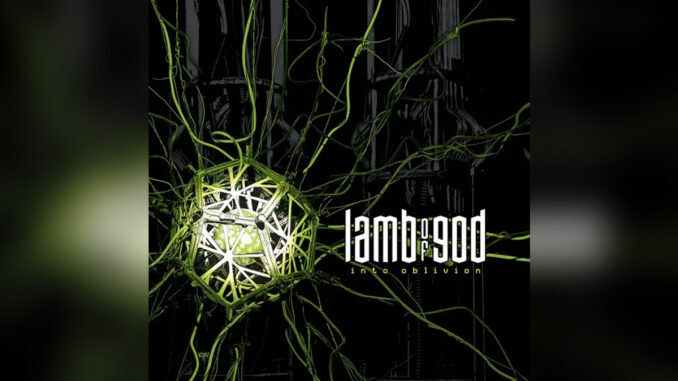
REVIEW – Few bands in modern heavy music have managed to maintain the kind of relevance, ferocity, and cultural awareness that LAMB OF GOD have sustained for more than two decades. From their early underground days as Burn the Priest to genre-defining albums like ‘Ashes of the Wake’ and ‘Sacrament’, the Richmond, Virginia titans have never been content to simply repeat themselves. With their tenth studio album ‘Into Oblivion’, arriving Friday, March 13 via Epic Records, the band once again proves why they remain one of the most important and uncompromising forces in modern metal.
Produced, mixed, engineered, and mastered by longtime collaborator Josh Wilbur, ‘Into Oblivion’ captures LAMB OF GOD at a fascinating point in their career. With nothing left to prove and a legacy firmly cemented, the band sounds liberated—channeling the raw energy of their early Richmond underground roots while simultaneously pushing their signature groove-heavy sound into new territory. Guitarists Mark Morton and Willie Adler deliver some of the most dynamic and aggressive riff work of the band’s career, while drummer Art Cruz continues to solidify his place behind the kit with thunderous precision and relentless power.
The album opens with the towering title track “Into Oblivion”, immediately setting the tone with a massive groove that feels both classic and ominously modern. Randy Blythe’s commanding vocal delivery cuts through the chaos with venom and clarity, delivering apocalyptic imagery that reflects a world teetering on the edge. It’s an opening statement that makes one thing clear: LAMB OF GOD are not interested in nostalgia—they’re here to confront the present.
That confrontation continues on “Parasocial Christ”, a blistering critique of social media culture and the increasingly hollow pursuit of validation in the digital age. The song’s razor-sharp lyricism is matched by a relentless rhythmic attack, with Campbell’s bass and Cruz’s drumming locking into one of the album’s most punishing grooves.
Lead single “Sepsis” taps directly into the band’s early Richmond influences, drawing inspiration from underground acts that shaped their formative years. The result is a track that feels like a bridge between eras—capturing the chaotic spirit of the band’s earliest material while delivering the crushing precision fans expect from LAMB OF GOD today. Meanwhile, “The Killing Floor” unleashes a politically charged barrage of riffs and rhythmic assault, channeling the band’s long-standing ability to transform social commentary into pure sonic aggression.
Midway through the album, “El Vacío” stands out as one of the most adventurous tracks the band has ever recorded. The layered guitar work creates a haunting and expansive atmosphere while Blythe delivers one of his most emotionally nuanced performances to date. It’s a striking moment that shows LAMB OF GOD are still willing to stretch their sound without losing their identity.
That experimentation continues with “St. Catherine’s Wheel”, which balances crushing heaviness with dynamic shifts and an almost hypnotic groove. The track feels both cinematic and visceral, showcasing the band’s ability to evolve without abandoning the ferocity that built their reputation.
The latter half of ‘Into Oblivion’ only raises the stakes. “Blunt Force Blues” looks back at the band’s early days and the once-distinct regional music scenes that helped shape their identity. There’s a sense of nostalgia woven into the aggression, giving the track a reflective edge beneath its crushing riffs. “Bully” follows with pure venom, delivering one of the album’s most confrontational and explosive moments.
Then comes “A Thousand Years”, a towering epic that blends apocalyptic imagery with massive, slow-burning riffs. The song feels mythic in scope, reinforcing the album’s overarching themes of societal collapse and the cyclical nature of human conflict. By the time the closing track “Devise/Destroy” arrives, the band unleashes one final barrage of relentless intensity, ending the album with a brutal reminder that LAMB OF GOD have lost none of their bite.
More than twenty years after ‘Ashes of the Wake’ captured the anxiety and anger of the early 2000s, ‘Into Oblivion’ stands as a modern counterpart, an album that reflects the fractures and tensions of the present day. But rather than simply reacting to the chaos, LAMB OF GOD channel it into something powerful and purposeful.
What makes ‘Into Oblivion’ so compelling is that it feels like both a culmination and a reinvention. It honors the band’s roots in the Richmond underground while embracing a broader sonic palette that keeps their sound fresh and unpredictable. After more than twenty-five years, LAMB OF GOD are still evolving and somehow still getting heavier.
In an era where many veteran bands rely on nostalgia, LAMB OF GOD have delivered an album that feels urgent, relevant, and absolutely devastating. ‘Into Oblivion’ isn’t just another strong entry in the band’s catalog, it’s one of the defining metal records of this era.
For more information on LAMB OF GOD, visit:
www.Lamb-Of-God.com
www.Facebook.com/LambOfGod
www.Twitter.com/LambOfGod
www.Instagram.com/LambOfGod
www.YouTube.com/User/LambOfGod
www.Spotify.com/Artist/LambOfGod